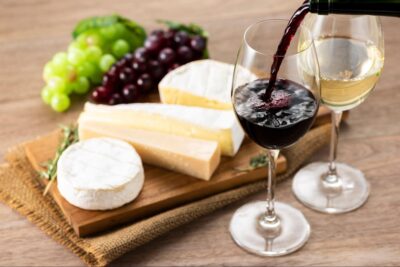
An elegant tablecloth, fine china, and lit candles—all the hallmarks of a gourmet dinner. Whether celebrating a special occasion with friends or just spending a romantic evening with your significant other, the right wine and food pairing can take your experience to the next level.
Starting in 1800s France all the way to the 1980s in America, food and wine pairing has become a culinary science. Join the food experts at the Markets at Shrewsbury as this blog explores top-tier wine and food pairings to impress your family and friends.
Tips for Serving Wine
Celebrity chefs like Gordan Ramsay, Wolfgang Puck, and Guy Fieri have become famous for promoting food and wine pairings with iconic recipes, restaurants, and vineyards.
Before we take a deep dive into how to pair food and wine, we’ll review the fine art and science behind serving wine to make it the perfect complement to your meal.
Serve at the Correct Temperature
The right temperature is key to bringing out the best flavors in your wine. Even the most expensive wine may lose its flavor if served improperly.
Wine temperatures are similar to a volume knob on a stereo. If the wine is too cold, it becomes muted like you turned the dial down to zero and you can’t taste the fruit or sugar. When it’s too warm, it’s like blasting the volume on the speakers—you get all the harshness of the alcohol fumes burning your nose.
The goal is to find the sweet spot somewhere in the middle. You should always keep your wine stored in the fridge and then open it before your dinner party so that it can reach the proper temperature.
Here are a few industry standards to reference when deciding how to serve your wine:
- Red & fortified wine: serve between 55°F – 65°F
- White & rosé wine: serve between 45°F – 50°F (Put in the fridge for 2 hours)
- Sparkling wine: serve between 40°F – 50°F
Choose the Right Glass
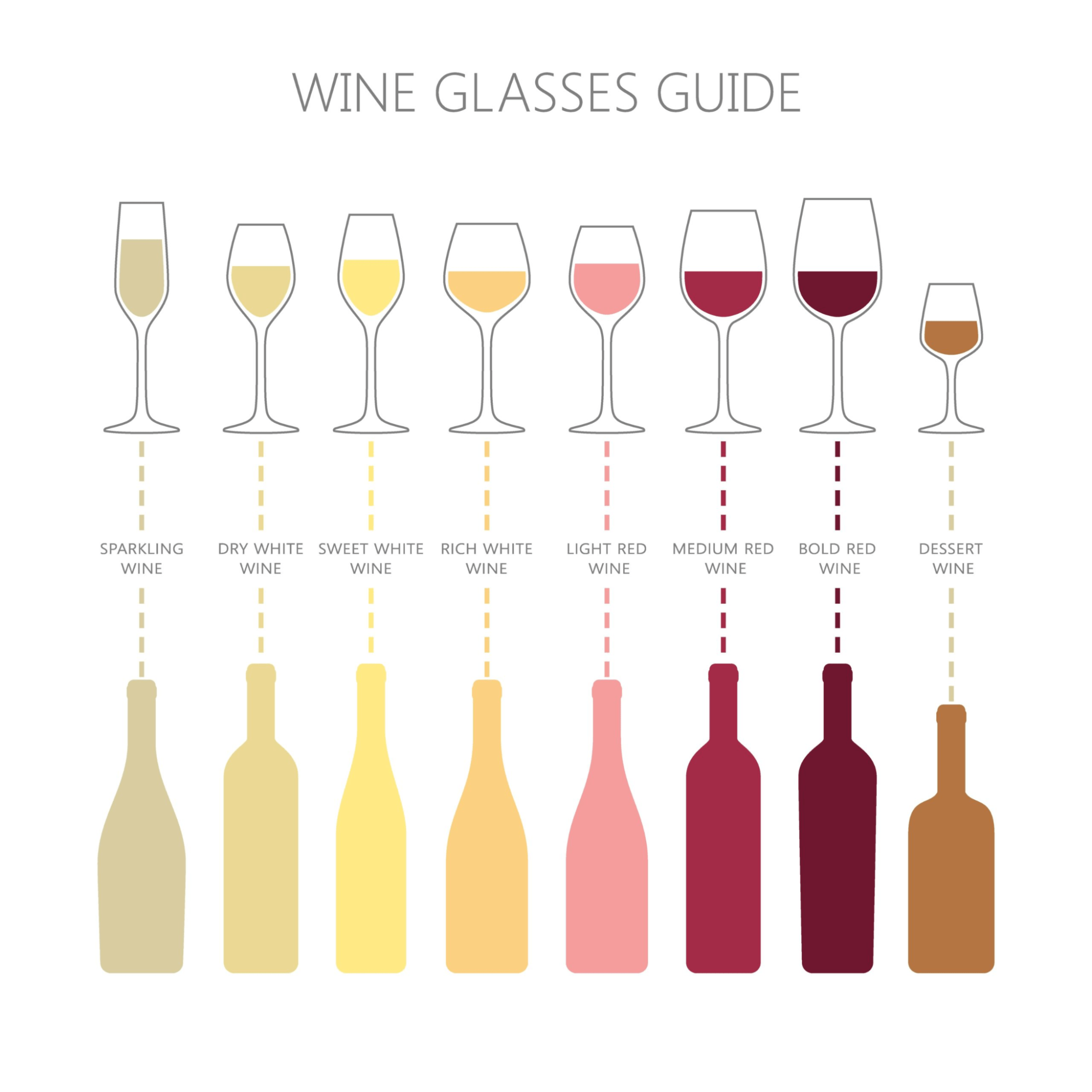
Although it may sound like a popular myth, scientific studies of wine glasses reveal that the shape of the glass does impact the flavor. Different glass shapes collect aromas and air them in interesting ways. It matters the most when you’re serving a light versus a full-bodied wine, since some types taste best served from a specific shape.
If you don’t have a wide variety of glasses, a rule of thumb is to serve anything bubbly or sweet in a flute or elongated glass and serve bolder or drier wines in a medium-sized bowl glass.
Anatomy of an Elegant Dinner: Top-Tier Wine and Food Pairings
For centuries, home cooks and professional chefs have perfected the cooking process to bring joy to family and friends. Let’s explore how to pair food and wine to surprise and delight your guests.
Wine and Cheese Pairing
There are three main rules of thumb for pairing wine with cheese that can help your next dinner go from blah to delectable.
1. Match the Intensity of Your Cheese and Wine
The ages of both the wine and cheese have a strong influence on flavor, texture, and intensity. Young cheese has high water content with a milky, delicate flavor. Yet, as cheese ages, moisture evaporates while fat and proteins remain, producing a robust, rich flavor.
The first rule of thumb is to match the intensity of the cheese with the wine. For example, it’s typically best to serve young cheese with young wines like sparkling, crisp white, rosé, or fruity red wine.
Pairings by age typically include:
- Young pairings: Young cheeses include mozzarella, burrata, and feta. Young white wines are light yellow and aged for less than 1-2 years. Meanwhile, young reds are purple and have aged for less than 5 years.
- Aged pairings: Semi-mature cheeses include classic favorites like havarti while aged cheeses include asiago and aged cheddar. Aged white wines at over 2 years old have a golden hue and aged red wines at 5-30 years old are a reddish-brown.
2. Pair Sweet with Salty
The combination of sweet and salty is another general rule for serving delicious pairings of wine and cheese. It’s best to serve your favorite sweet wine with a salty cheese and pair dry wines with a smoky or spicy cheese.
All wines can be made sweet, dry, or somewhere in between. It all depends on two factors: Residual Sugar (RS) and Alcohol by Volume (ABV). A high ABV usually means the RS is low, resulting in a dry flavor, and vice versa.
Although we’ve established that wines vary within certain categories, generally the most common flavor categories include:
- Dry white: Chardonnay, Sauvignon Blanc, Pinot Gris, Brut Champagne
- Dry red: Pinot Noir, Malbec, Merlot, Zinfandel, Cabernet Sauvignon
- Semi-sweet: Riesling, White Zinfandel, Rosé, Sweet Red
If you’re not sure about the flavor of your wine and there’s no nutrition label on the bottle, a wine tech sheet can help you get started with advanced pairing.
3. Mix Textures
Choosing complementing or contrasting textures is one of the key parts of building any high-quality charcuterie spread.
For example, you can complement textures by pairing a rich and creamy cheese with a buttery, oaky wine. Meanwhile, you can contrast textures by serving a rich, hard cheese with a bubbly, sparkling wine. The texture of cheese is generally determined by creaminess versus hardness, while wine is a little trickier to identify.
In essence, the mouthfeel for wine is described by words like smooth, silky, sharp, bright, gritty, or heavy. Experts are referring to the body of the wine—light-bodied (smooth), medium-bodied (slightly fruity and rich), or full-bodied (hearty).
Appetizers and Wine Pairing
Now that you’ve learned the fundamentals of pairing wine and cheese, we can dive into starters. One-bite appetizers are an excellent way to entertain and satisfy your guests while they wait for the main course. There’s an endless variety of options from cultures around the world.
A few of our favorite examples include sparkling wine with fried bites, white unoaked wine with spicy snacks, or rosé with classic apps (like charcuteries or tapas).
Not sure where to start? We’ve created a food and wine pairing chart with 10 of the top appetizers and how to pair them with wine.
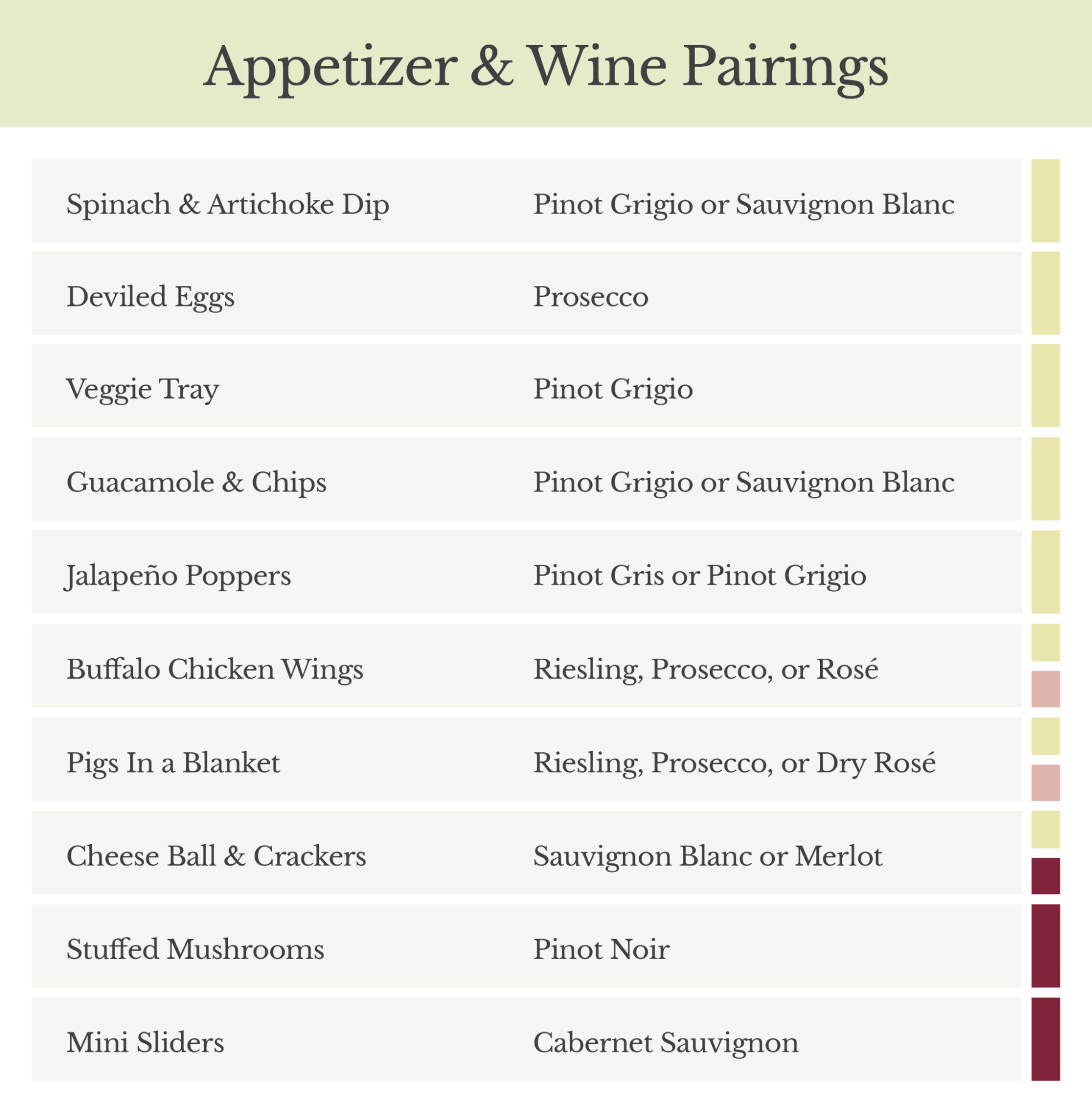
Ready to shop for your appetizers? The Markets at Shrewsbury has a wide array of food merchants offering everything you need from fresh cut, locally-sourced meats to produce and jarred goods.
Entrée and Wine Pairing
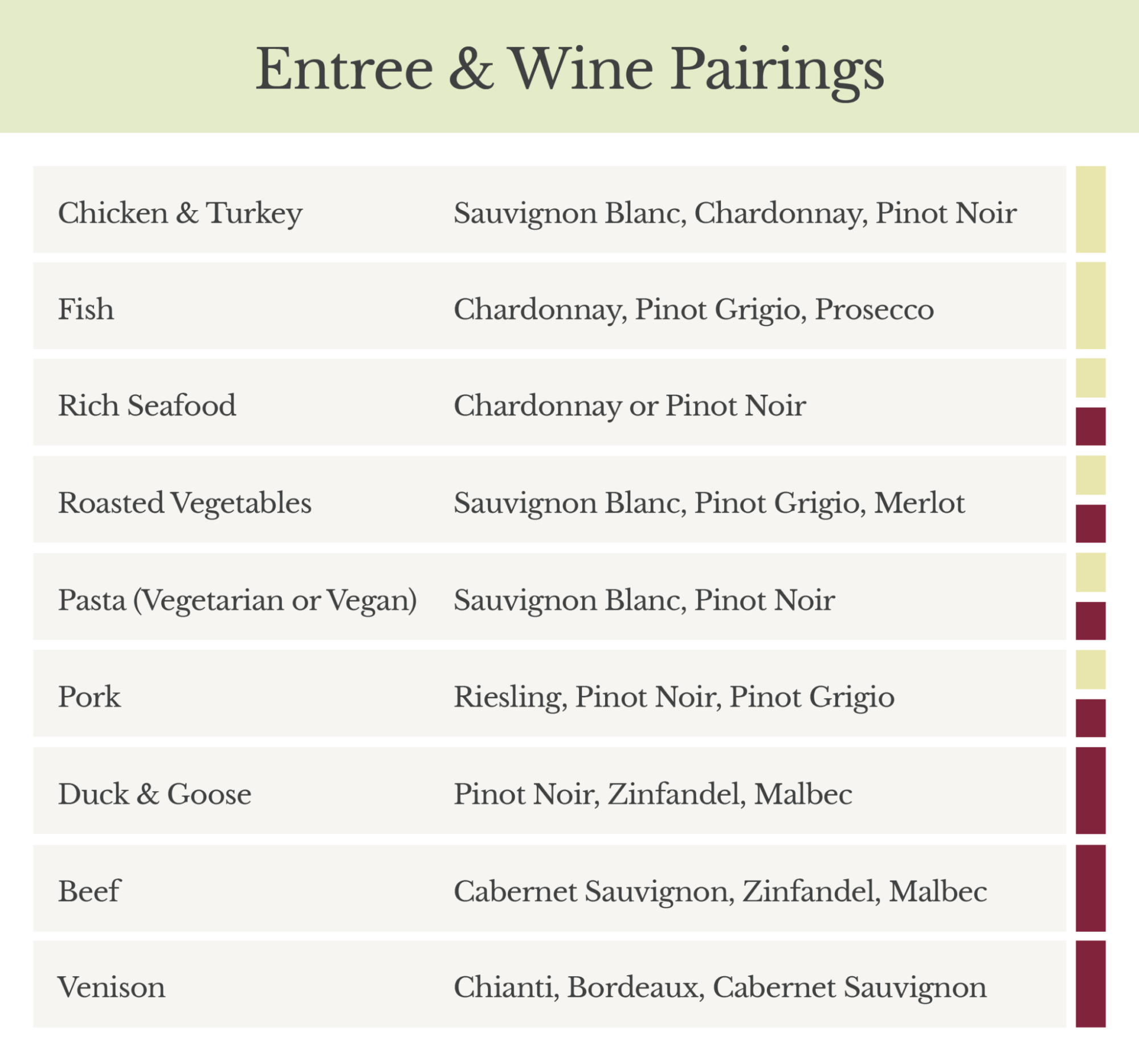
Entrées are another excellent option for pairing with your favorite wines. The goal is to match the intensity of the wine with the richness of your dish. Light proteins like chicken, turkey, and fish pair well with crisp whites like Sauvignon Blanc and Pinot Grigio. Rich seafood goes well with a full-bodied Chardonnay or even a light Pinot Noir.
Check out our cheat sheet to review the top entrée and wine pairings for your next event.
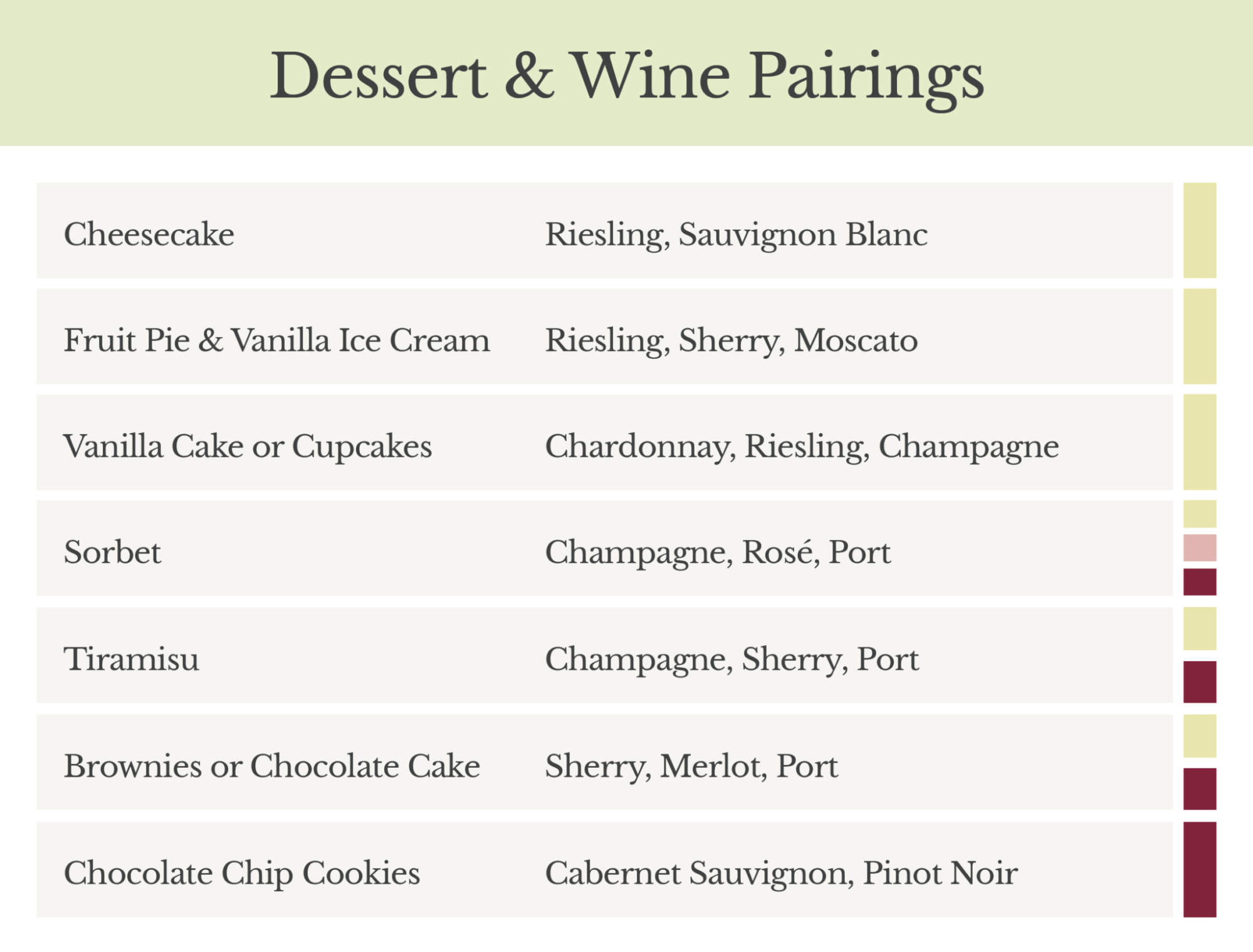
Dessert and Wine Pairing
Place the cherry on top of your meal with an outstanding dessert wine and food pairing. Although home chefs often associate wine with appetizers or the main course, there are five types of dessert wine:
- Sparkling
- Lightly Sweet
- Richly Sweet
- Sweet Red Wine
- Fortified Wine
The key is to pick a wine that’s sweeter than the desert. For example, a richly sweet wine like Sauternes or late Harvest should pair with Crème brûlée, cheesecake, or caramel-heavy dishes.