

You know it’s true. Few meals compare to a great steak. There’s just something about a tender, juicy cut bursting with flavor—and of course the savory goodness that is high-quality beef.
But how do you cook the perfect steak—especially if you don’t fancy yourself a grill-master or have other fancy equipment? Well, don’t sweat it. Cooking the perfect steak is easy.
You just need the right method for your kitchen and a few practical tips.
All of which you’ll find below.
Method 1: Fire Up the Grill
Grilling is a classic for a reason. The grill’s high heat creates a beautifully browned crust, and your steaks end up with a subtle smoky flavor that’s incredible in your mouth.
Plus, grilling the perfect steak is easy.
Here’s how:
- Let your steak sit at room temperature for about 20–30 minutes before cooking. This allows for a more even cook.
- Pat your meat dry with a paper towel and season generously with salt and pepper.
- Preheat your grill to 400°F – 450°F.
- Place steak directly over heat and cook without movement for several minutes on each side. To gauge the level of doneness, use a thermometer with the guidelines listed below.
- Remove from grill and rest steak for 5–10 minutes before cutting so juices can redistribute.
Bon appétit!
Method 2: Sear in Cast-Iron Skillet
Prefer a thicker, crispier crust? Reach for the cast-iron skillet.
Here’s how to pan-sear for the perfect steakhouse-style crust:
- Heat your skillet over medium-high to high heat until it is very hot.
- Pat steak dry and season well.
- Add a small amount of high-heat cooking oil to skillet (canola, avocado, grapeseed oil, ghee) and carefully place your steak in the pan.
- Sear meat undisturbed for a few minutes on each side. Once both sides have a rich brown crust, add butter, garlic, and herbs like rosemary or thyme. Tilt the pan and spoon melted butter over the steak as it finishes cooking.
Pan searing works well for Filet Mignon, Tenderloin, New York Strip, and Flat Iron cuts. For a complete list of beef cuts that work well for each cooking method, read on!
Method 3: Reverse Sear
Cooking thicker cuts? The reverse sear may be your best bet.
While this cooking method is a bit more time-consuming, the results speak for themselves: a beautifully crusted steak cooked perfectly throughout—regardless of thickness.
To master the reverse sear:
- Preheat your oven to 250°F.
- Place your pat-dried and seasoned steak on a rack over a baking sheet. Cook until the meat is a bit below your desired inner temperature (see our temperature listing below).
- Heat your skillet over medium-high to high heat until it is very hot.
- Transfer steak to skillet and sear both sides in a high-temp cooking oil like canola, avocado, grapeseed oil, or ghee for one to two minutes.
Enjoy a deeply browned crust and evenly cooked interior!
Method 4: Cook Under Broiler
No grill? No problem.
Here’s how to cook a great steak under your oven’s broiler:
- Allow your meat to sit at room temperature for 20–30 minutes before cooking.
- Place the steak on a broiler-safe pan or wire rack positioned several inches below the broiler.
- Cook 4–8 minutes on each side—but keep a close eye on it. Broilers can get extremely hot and burnt meat is easier than on a grill.
Enjoy a beautiful steak cooked under the oven! Broiling is a great option for those frigid winter months when you don’t want to stand out in the cold.
Method 5: Sous Vide and Sear
Looking for an evenly cooked interior? Nothing beats sous vide.
Sous vide cooking involves sealing your steak in a bag and placing it in a temperature-controlled water bath. Since the water stays at a precise temperature, the steak cooks evenly from edge to edge—resulting in a nearly foolproof way to cook the perfect steak.
Here’s how to sous vide and sear:
- Once your steak reaches the desired internal temperature, remove it from the bag and pat completely dry (surface moisture negatively affects browning).
- Finish the steak with a hot sear in a cast-iron skillet or on the grill—just a short amount of time to develop the crust.
The result is a precisely cooked interior with a well-browned exterior—every darn time.
How Do I Tell if My Steak is Done?
Always use a meat thermometer to gauge the doneness of your steaks. Additionally, remove your steak from your heat source when internal temperatures are 5°F below your desired temperature (unless cooking sous vide), as the insides will continue to warm when resting.
Steak doneness temperature scales:
- Rare: 25°F–130°F (cool to warm red center)
- Medium-Rare: 130°F–135°F (warm red/pink center)
- Medium: 135°F–140°F (warm pink center)
- Medium-Well: 140°F–150°F (slightly pink center)
- Well-Done: 155°F+ (little to no pink)
The Secret to a Great Steak—No Matter How You Cook It
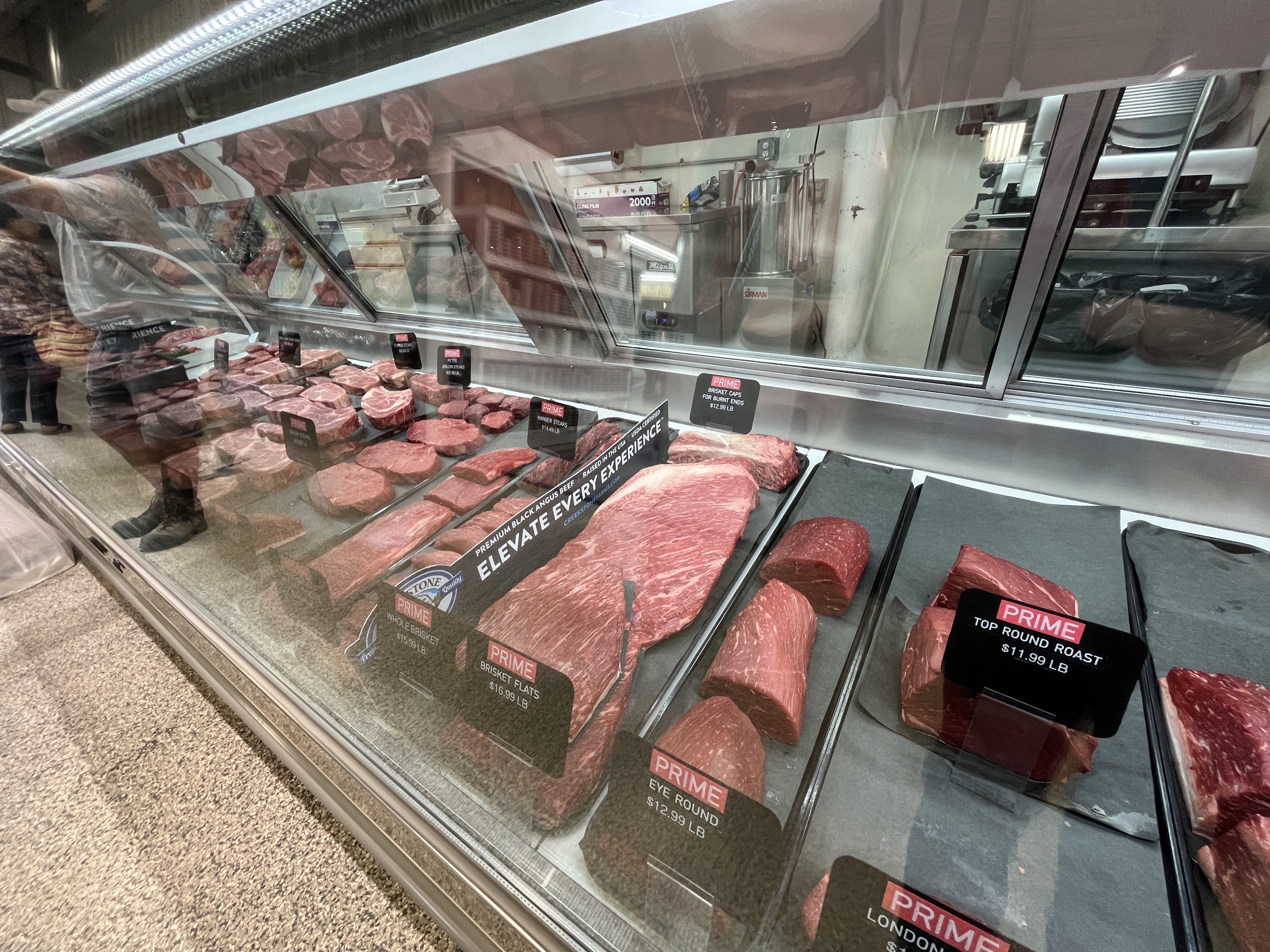
The secret to a great steak is simple. Start with high-quality meats from a local butcher shop. Beyond that, it’s about matching your cooking method with your available equipment and the right cuts of meat.
Here’s what our local butcher, Country Style Fresh Meats, suggests:
- Grilling: Ribeye, New York Strip, Skirt of Slank, Porterhouse/T-Bone
- Cast-Iron Sear: Filet Mignon/Tenderloin, New York Strip, Flat Iron
- Reverse Sear: Thick cuts and inch and a half thick or more
- Broiling: Top Sirloin, T-Bone/Porterhouse, Tri-Tip
- Sous Vide: Ribeye, Filet Mignon, Top Sirloin Cap
And for the record, Daniel Stoltzfus —our friendly butcher at Country Style Fresh Meats—shares his favorite way to cook up fresh local meat:
“My favorite method of cooking a steak is searing on a cast iron skillet over wood charcoal—and braising with garlic butter. It’s delicious!”
Visit Us at The Markets for the Perfect Cut of Beef—And More!